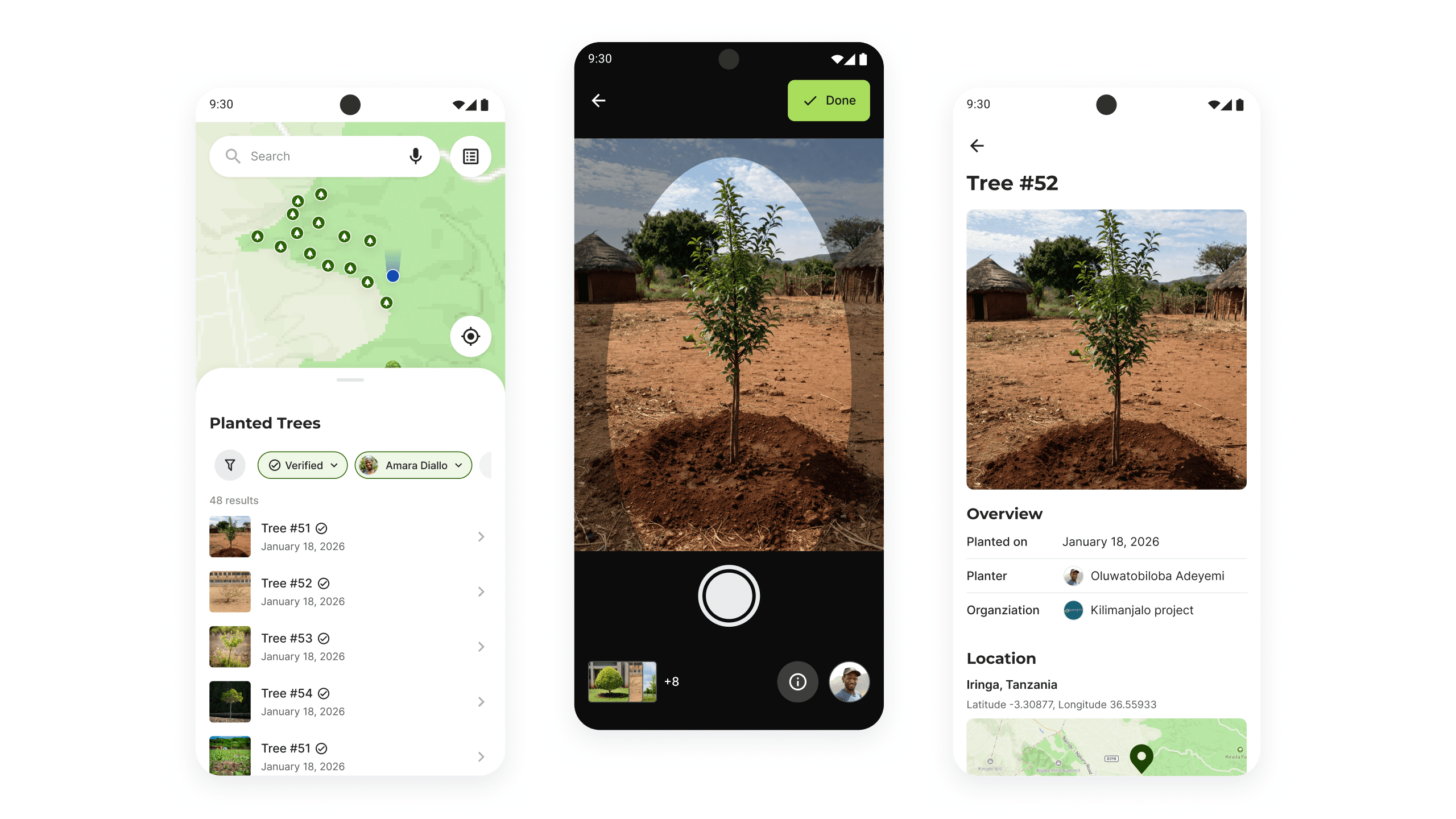
Ceneco Green Power, a Nigerian solar company, specializes in solar system installation and maintenance for residential, commercial, agricultural, off-grid use, and EVs. The company is rebranding as an African solar tech leader, leveraging AI and IoT. Our mission as UX consultants was to redesign the website.
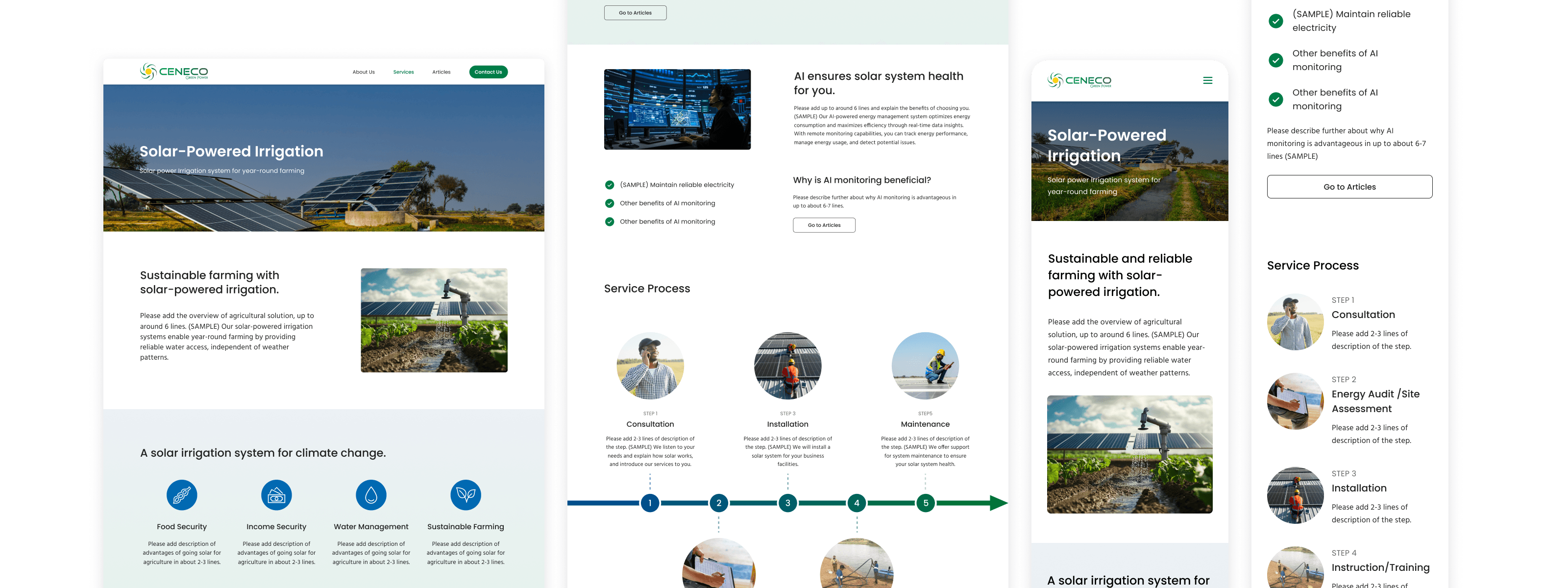
Ceneco Green Power Website
How I collaborated within regional and resource constraints, resulting in strong client satisfaction and buy-in
- Project Type
- UX consulting for Ceneco Green Power (Nigerian solar power company)
- What I did
- Redesign of entire website, desktop and mobile (22 pages)
- Team
- 4 UX designers, client CEO
- My Role
- Research: Collaborative Design: Design of service pages, and design guide documentation.
- Impact
- On-time delivery of design deliverables. Partial implementation of the proposed design into their live site and reported positive user feedback.
Client
Redesign the website to reflect the new brand and enhance the user experience
Our Mission
Redesign the website to reflect the new brand and enhance the user experience
Our mission as UX consultants was to redesign the website and enhance the overall user experience.
Problems
While the business thrives on word of mouth, the website wasn't performing as well
Site analytics revealed low traffic (50 users/month) and a high bounce rate (68%), indicating poor customer acquisition through the website. We identified 3 underlying issues that needed to be addressed.
What the audit revealed
Unclear Offerings
Confusing IA and lack of information make it difficult to understand the services.
Lack of Credibility
Limited content and inconsistent design and images raised concerns about credibility.
Brand Misalignment
The old website did not reflect the company's new identity as a tech leader.
Challenges
We had regional and resource constraints
The project required designing for a market we couldn't directly access, while considering Nigeria's distinct energy context and the client's limited resources. These constraints shaped our approach, requiring close stakeholder collaboration and continuous consideration of local context throughout the process.
No direct access to Nigerian users
Regional barriers prevented access to Nigerian customers
Different energy context
Nigeria's less reliable energy access made understanding the local context essential.
Limited client capacity
The small team managed the site. A simple, scalable design were key to long-term impact.
Research
Balancing alignment with industry standards and originality is key for solar websites
With no direct access to Nigerian customers, we adjusted our research approach. In place of user interviews, we analyzed the websites of 9 solar companies across Nigeria, US, and Europe, and interviewed the client's CEO and COO to understand the industry, their business, customers, and the Nigerian context.
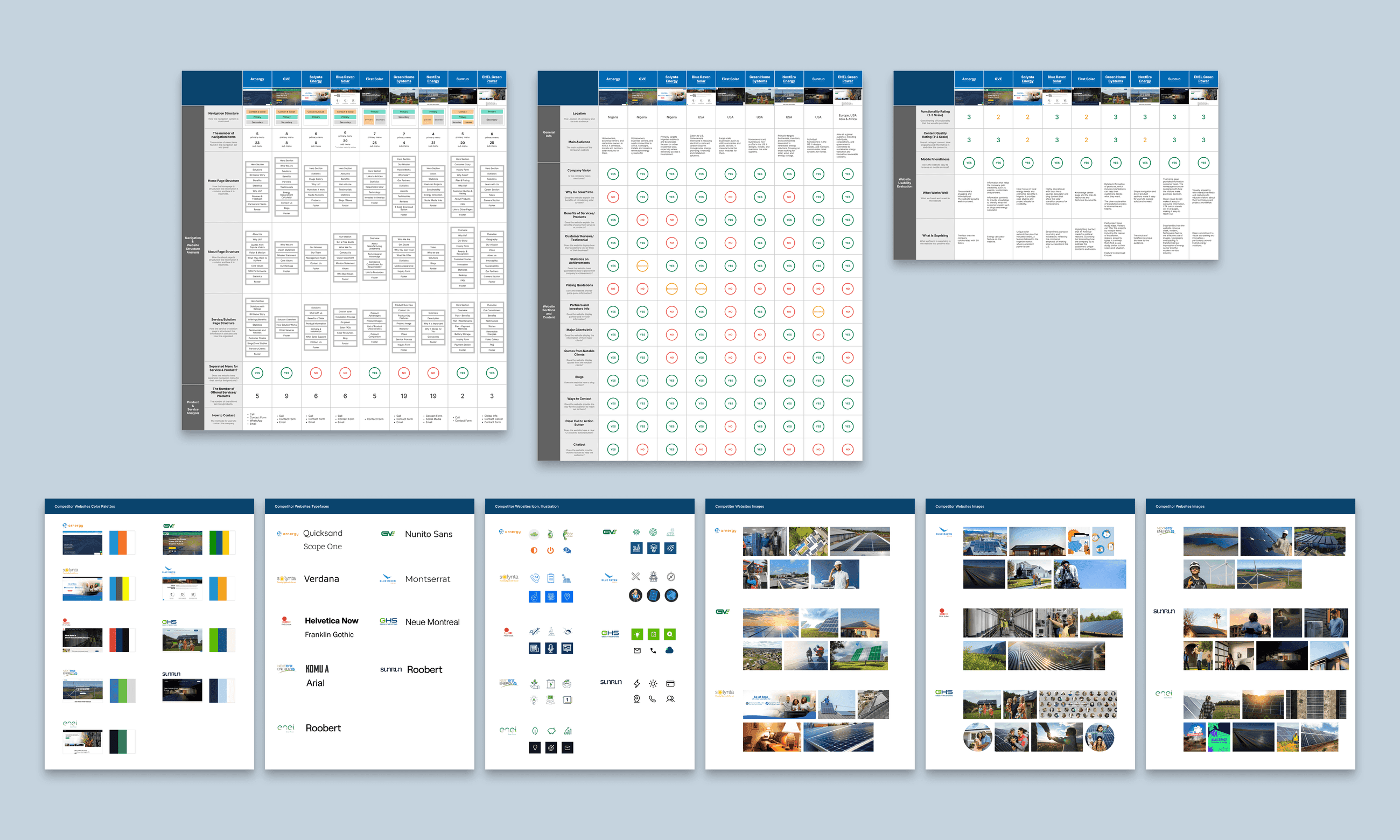
Our competitive research showed that most competitor websites looked similar, highlighting both a common direction to follow and the importance of differentiation. Interviews showed that the company values transparency and strives to communicate its strengths to customers with limited knowledge of solar energy.
Research Findings
Customers
Solar as reliable and affordable energy
In Nigeria, grid electricity is often unreliable, inaccessible, and costly, making solar power an important alternative.
Cost is main concern
Pricing remains a concern, and the client frequently receives questions about it.
Competitors
Using data to build credibility
Competitors show diverse data such as metrics, reviews, and partnerships to build credibility.
Storytelling across journey
Competitors craft narratives that empathize with users at every stage, from entry to contact
Client opportunities
Balance industry norms with distinctiveness
Competitors share the consistent similar visual design norms of colors, images etc.
Quality, innovation, transparency
The client actively communicates the value of solar and the company’s strengths to customers. The website should reflect this.
Design Strategies
Turning research insights into design direction
The research revealed 4 strategic opportunities that guided the redesign.
Technology showcase
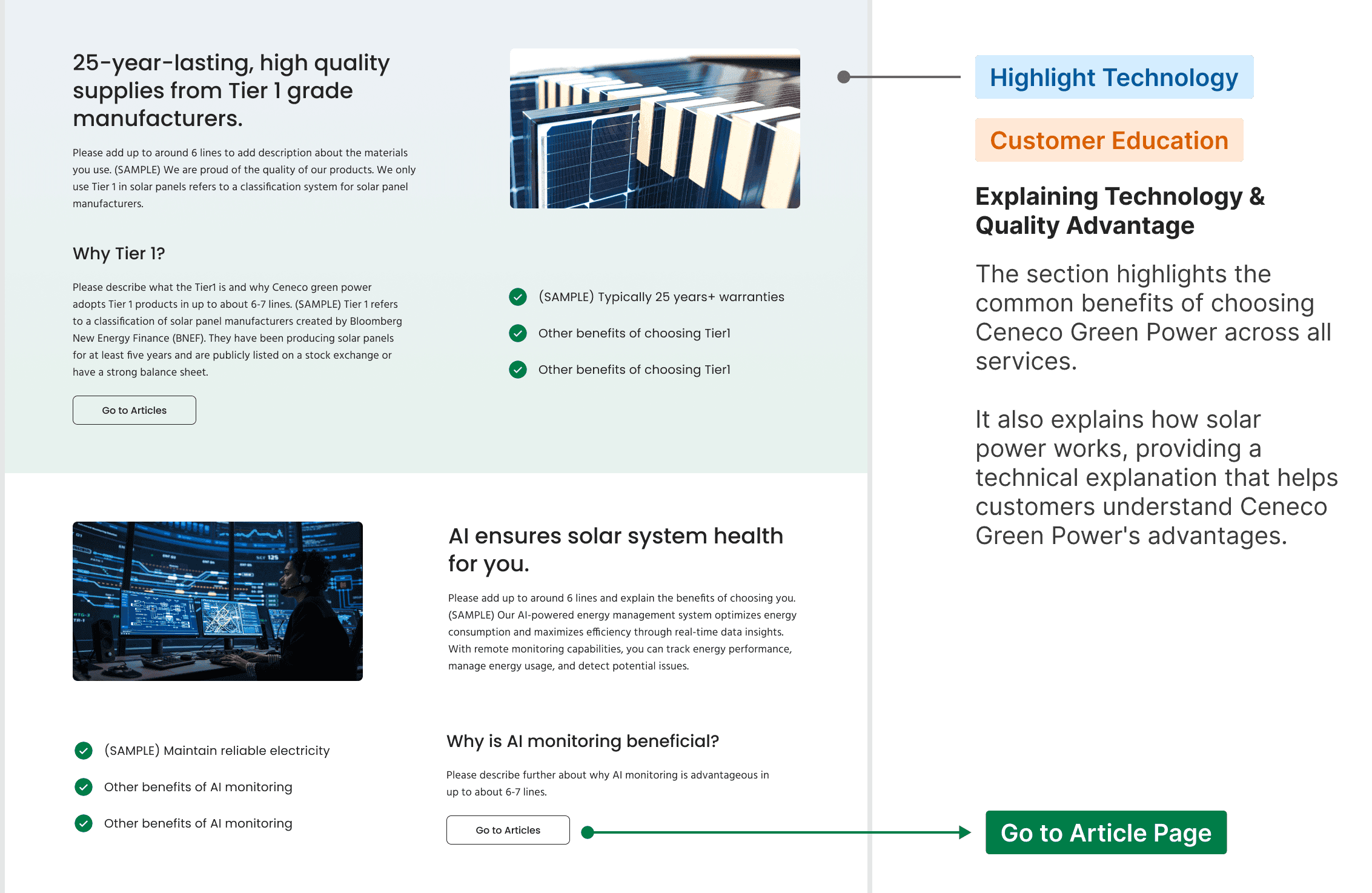
Showcase the technology to reinforce the client’s position as an industry leader.
Demonstrate impact
Use results and data to demonstrate success and build credibility.
Customer education
Make solar energy easier to understand and clearly communicate its value.
Journey-led storytelling
Address customer needs and concerns at each stage to support confident decision-making.
Information Architecture
Held a workshop to incorporate the client's needs and align on website content volume
We conducted a workshop with the client to consider what information to include on each page using a typical competitor sitemap as a reference. After this, we made sitemap using the result.
Workshop objectives
Foster satisfaction for future buy-in
Align the design with client preferences to minimize gaps between expectations and the final outcome.
Set expectation for content volume
We aimed to define a feasible scope for the client and ensure they were ready for implementation.
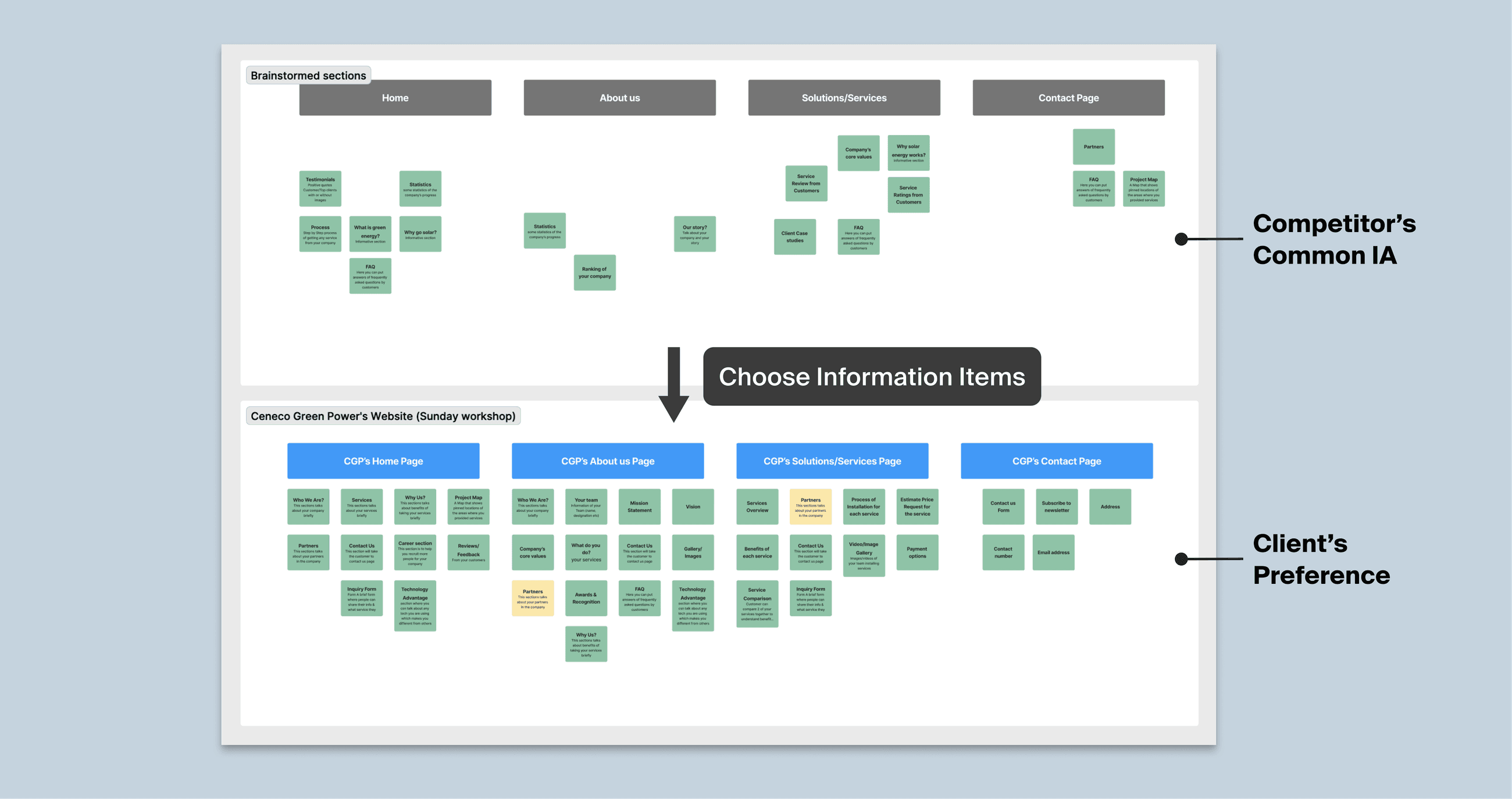
Typically used with users to inform information architecture, card sorting was adapted here to understand how the CEO envisioned the site structure compared with common competitor patterns identified through research.
Final Design
See how the strategy shaped the final design
The walkthrough below highlights how the design strategies were translated into key decisions across the final experience. My primary responsibility was designing the service pages.
Service main page
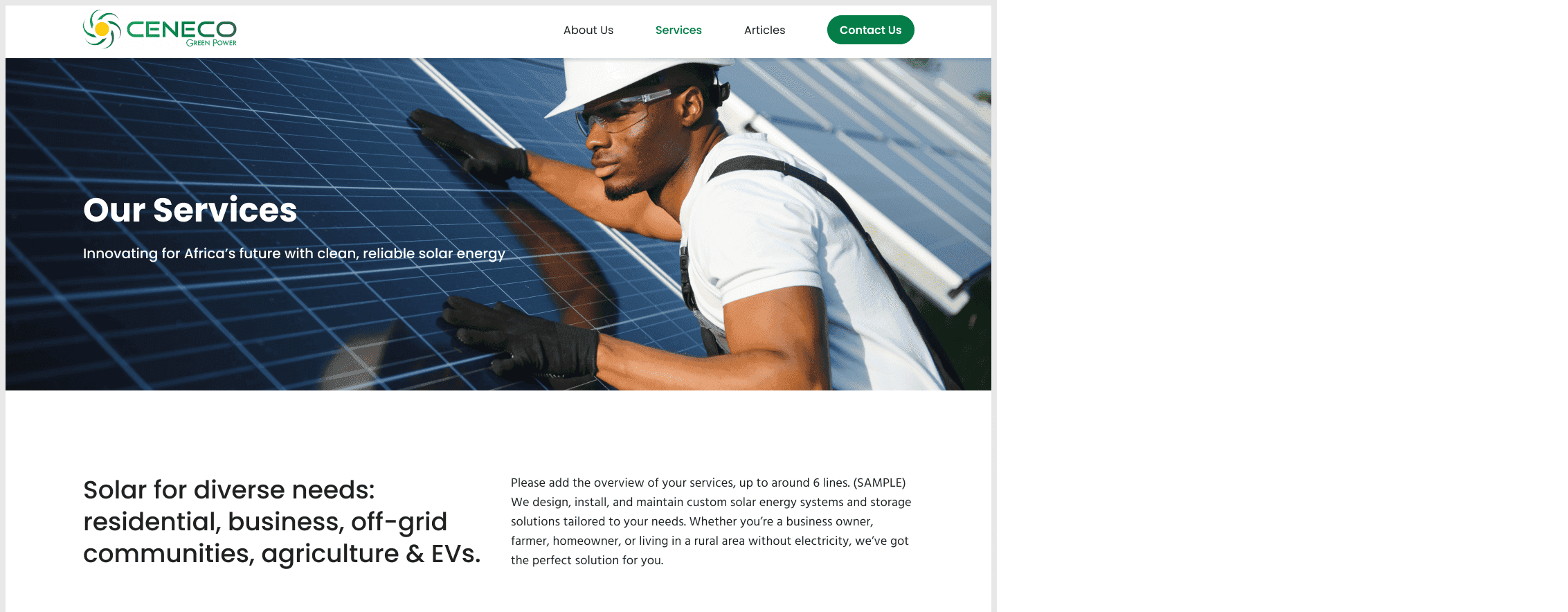
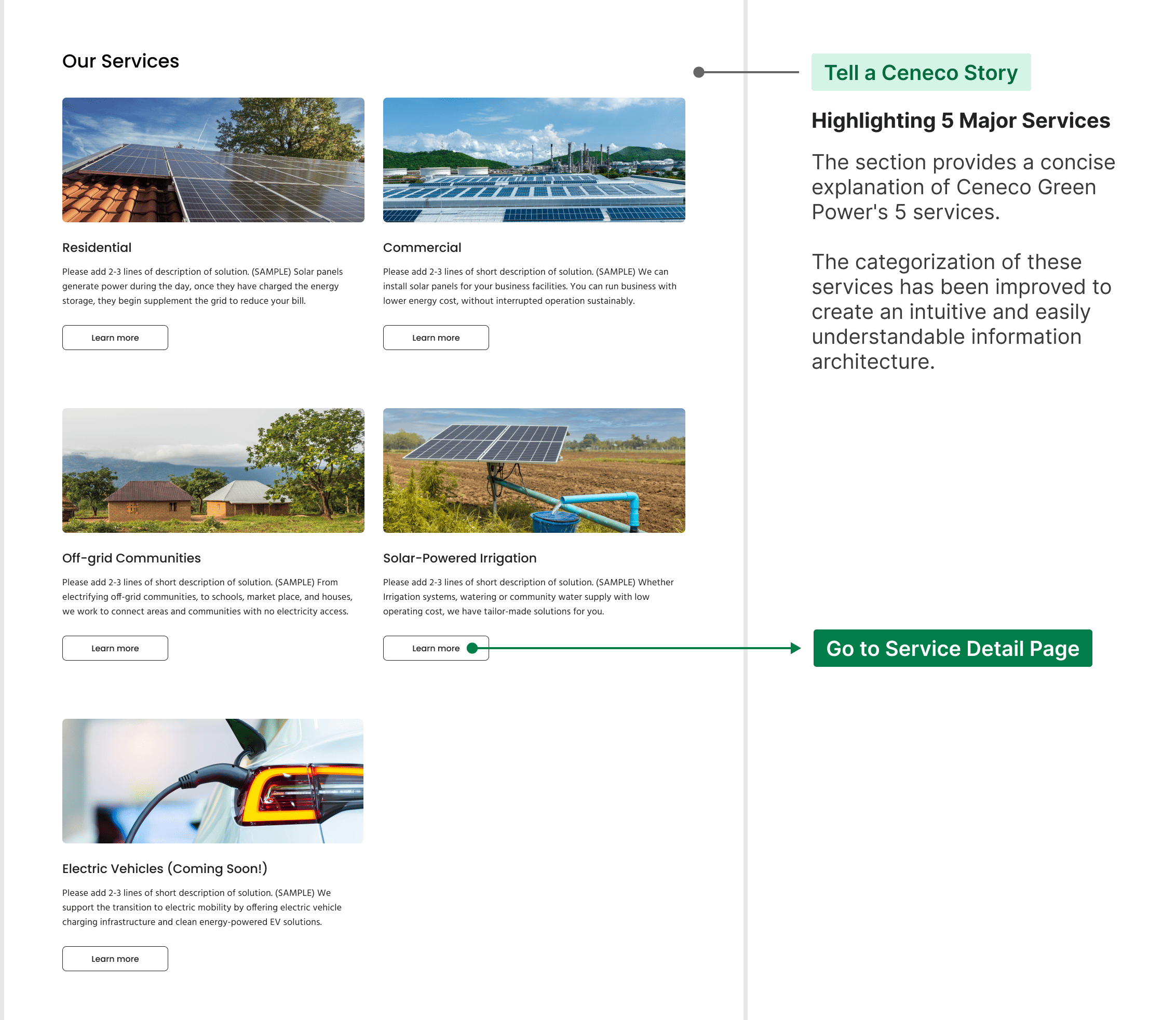
The service main page highlights Ceneco Green Power's services and focus on tech integration easily.
Service detail page
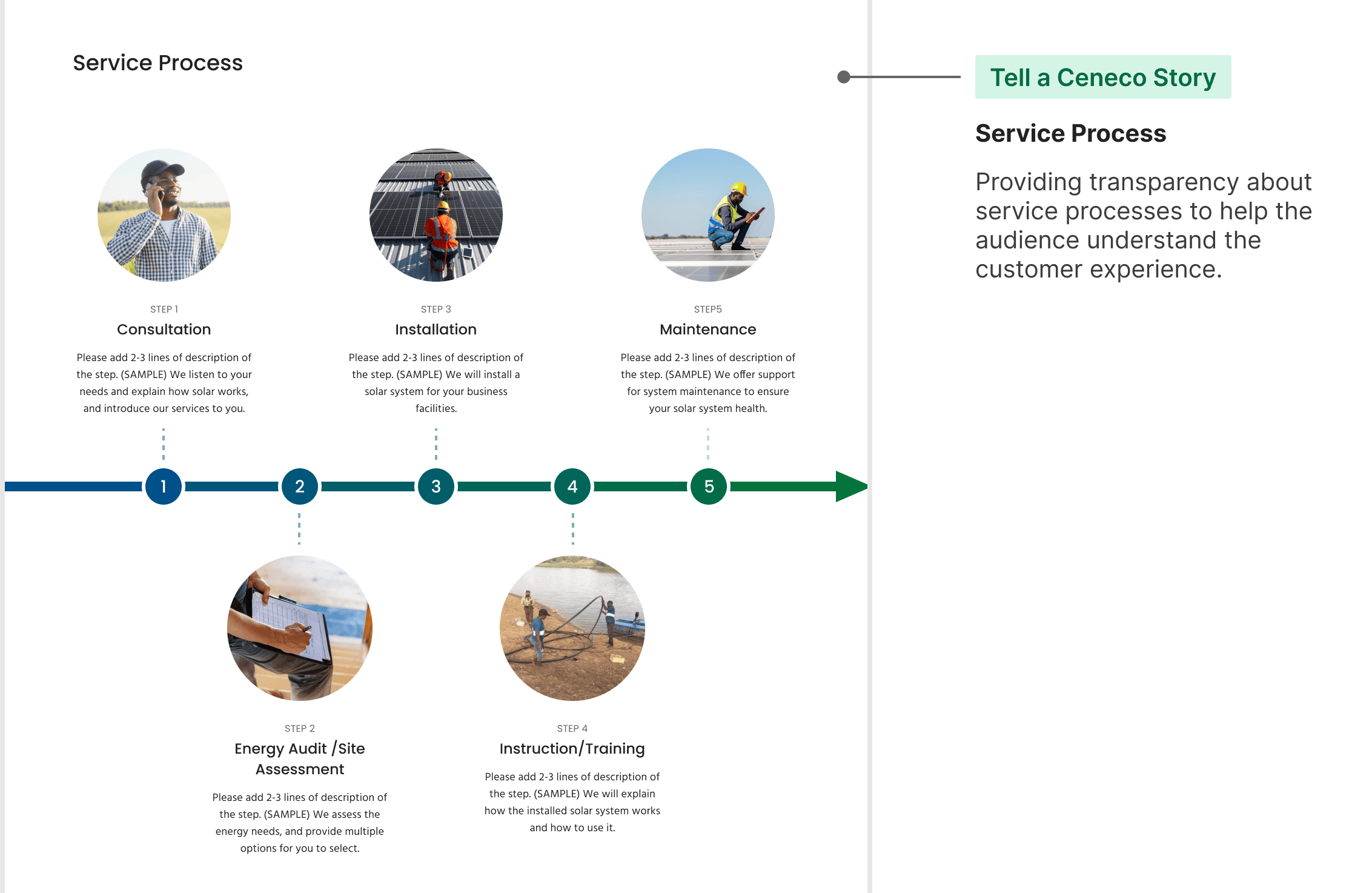
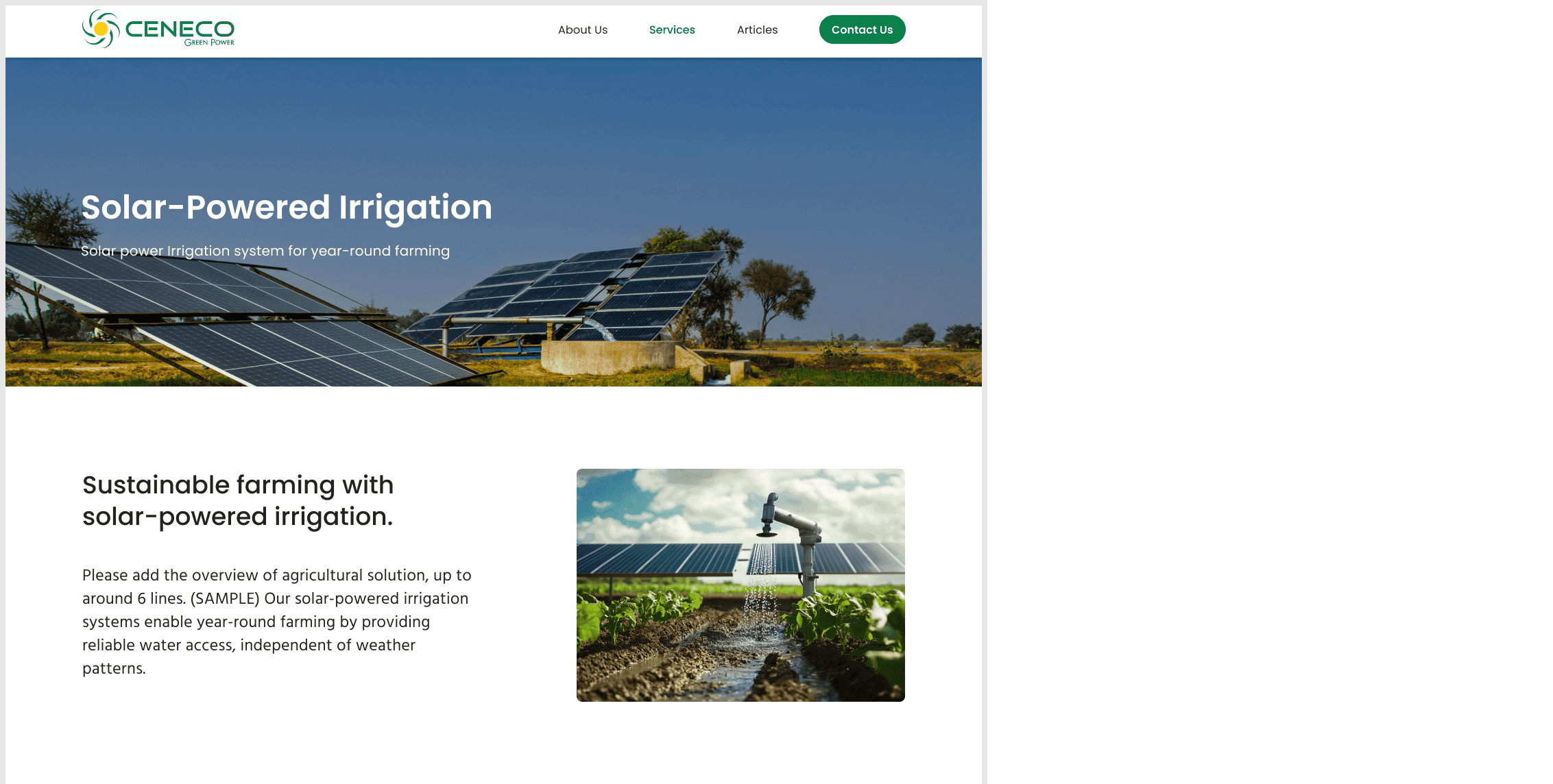
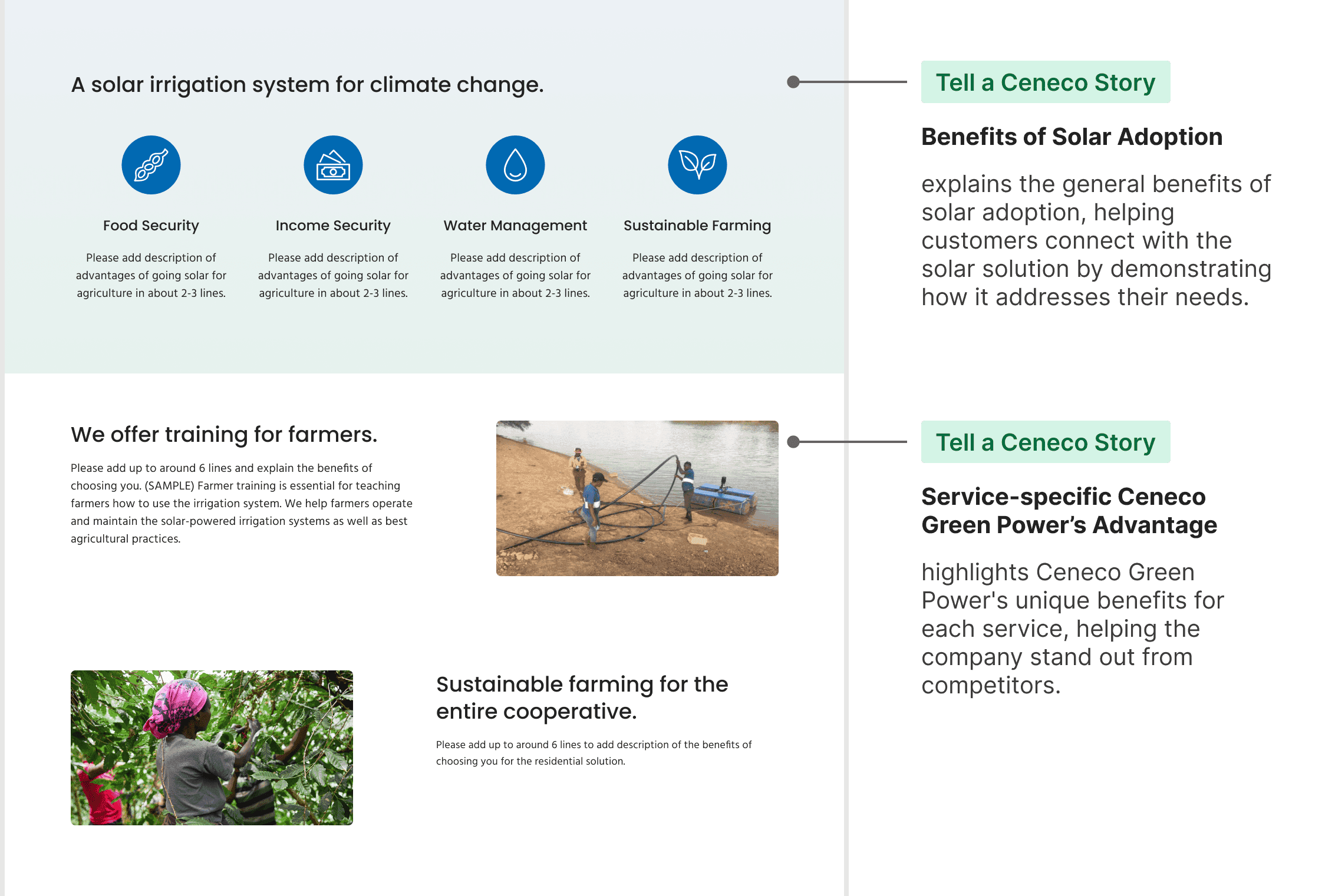
The service detail page explains the service in detail and why the audience should go solar and choose Ceneco Green Power.
Desktop
Mobile
Iteration
Making the website more unique and appealing
After creating the version 1 prototype, we gathered feedback from 4 users and refined the design. Below are some of the key improvements.
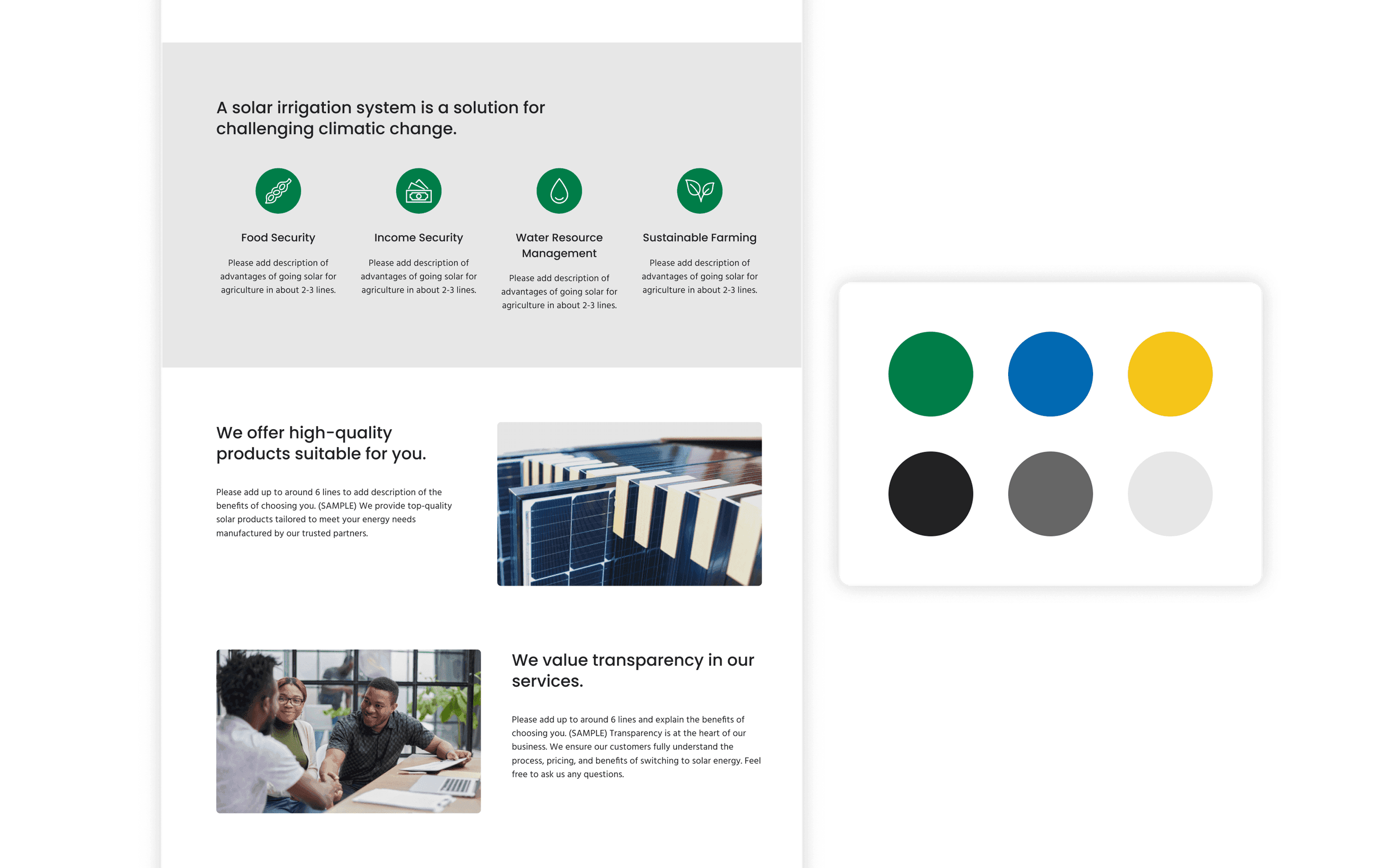
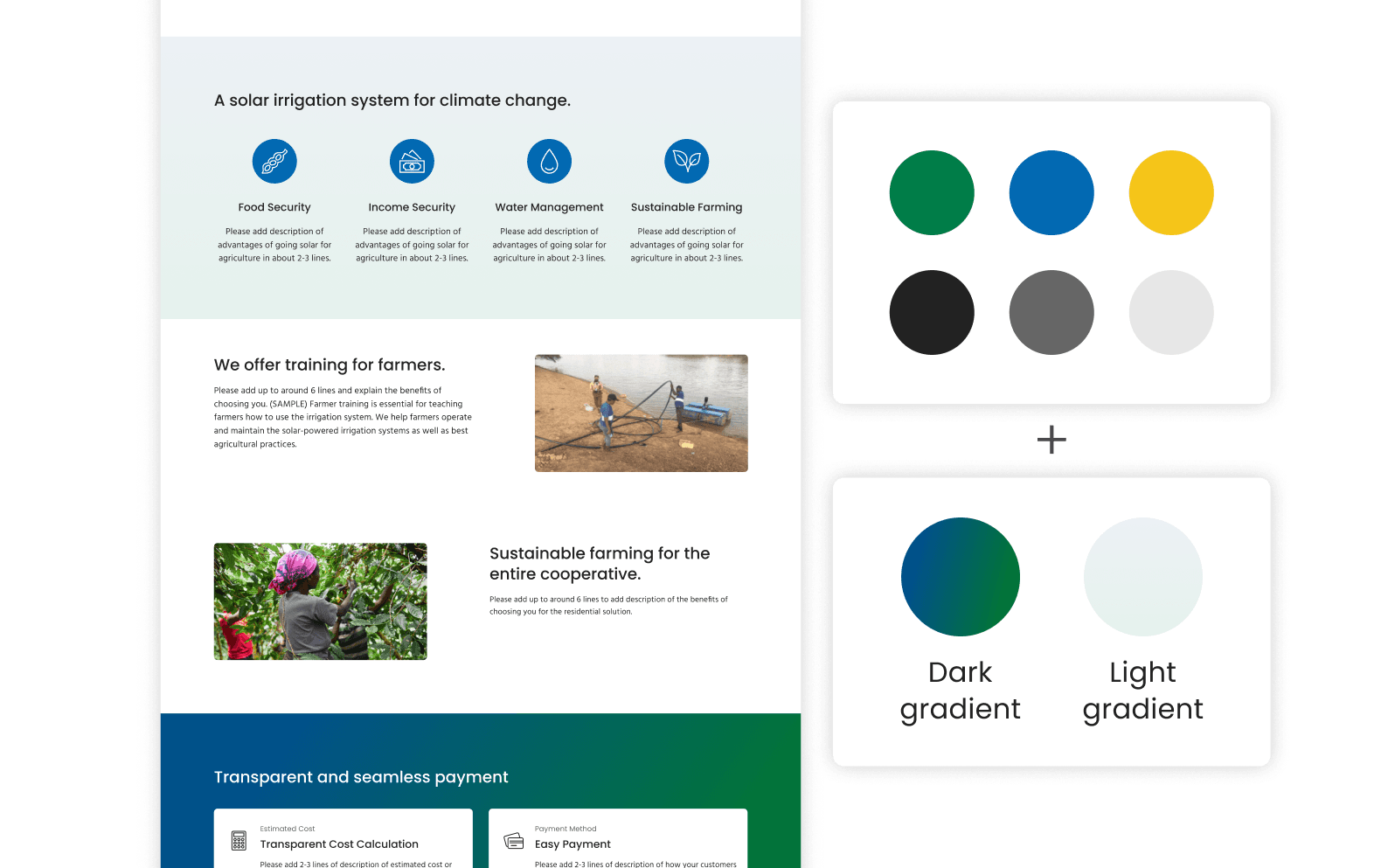
Added gradient colors to convey a technological feel
Our initial color palette felt too generic and lacked a technological feel, so we introduced 2 gradient palettes, one in dark blue-green and one in light blue-green, to make the visuals more distinctive.
Before - ver 1
The page felt less engaging, especially due to the neutral background.
After - ver 2
Gradient-accented backgrounds feel livelier and more technological.
Visually highlighted the service process
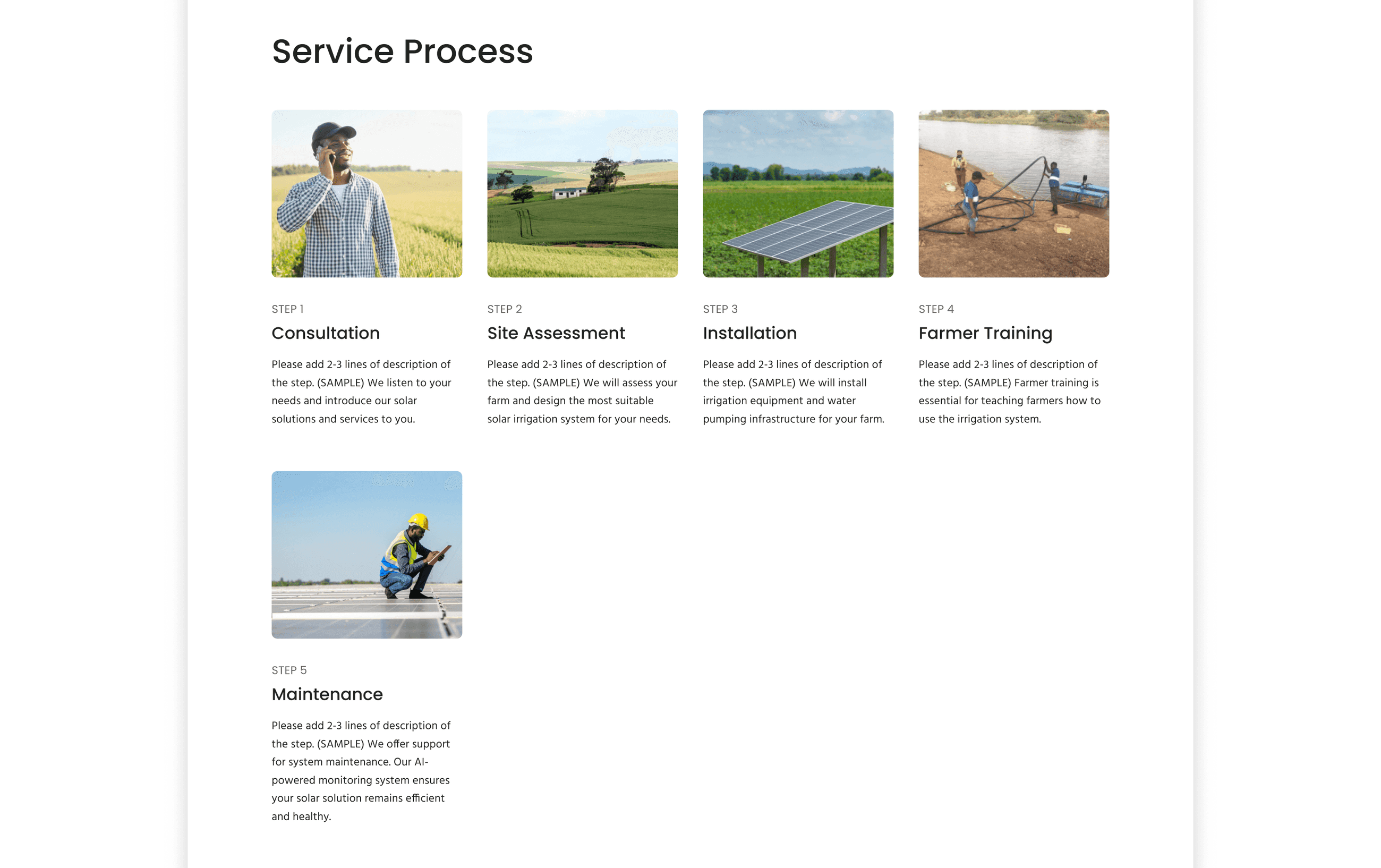
The service process section is important for understanding the offerings, but the initial design did not convey a clear sequence, which made it easy to overlook. I redesigned it to clearly communicate the flow.
Before - ver 1
It's easy to implement but doesn't convey a clear sense of sequence.
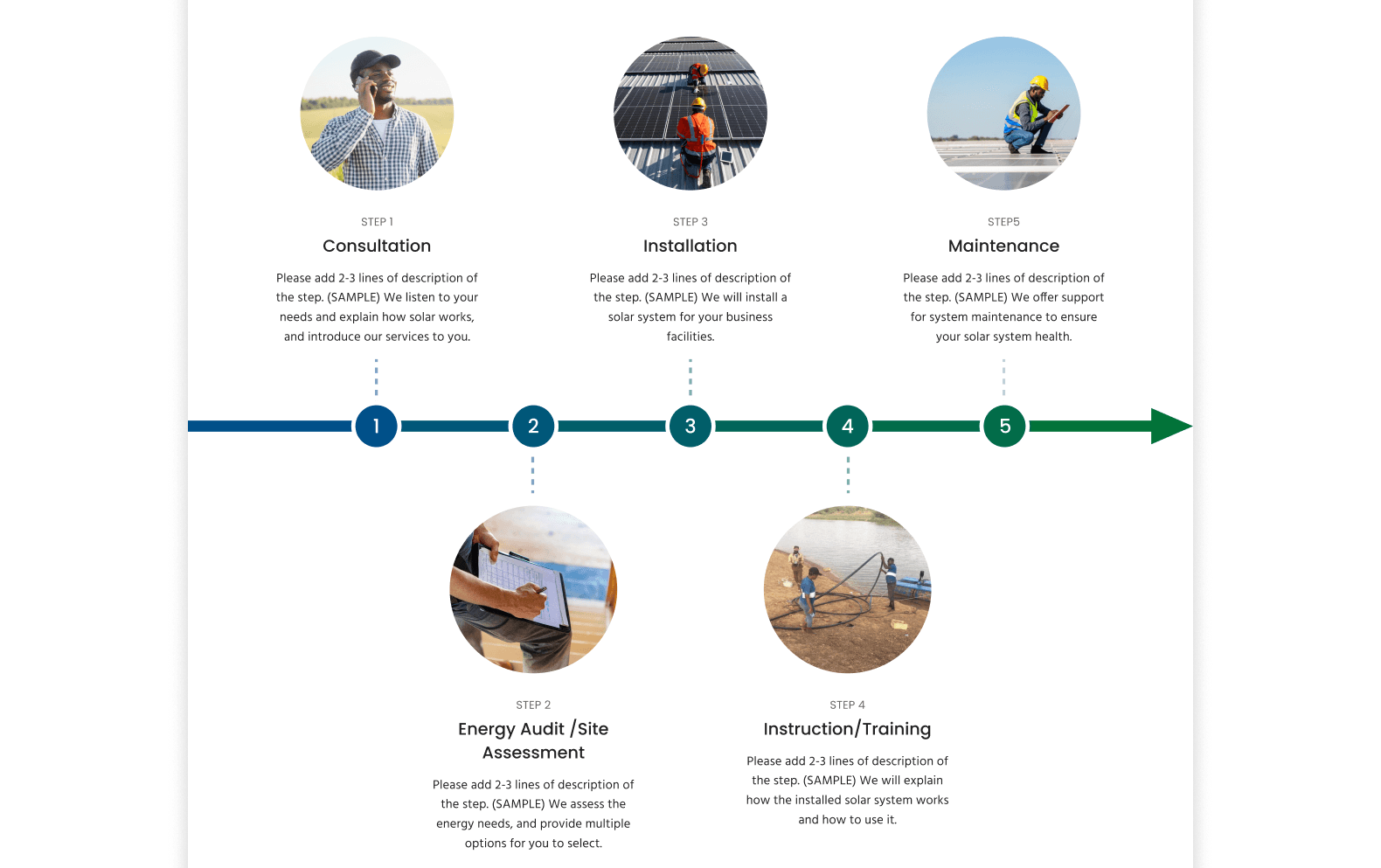
After - ver 2
Although technically more complex to implement, the arrow diagram effectively communicates the sequence.
Added a project gallery to showcase real project images
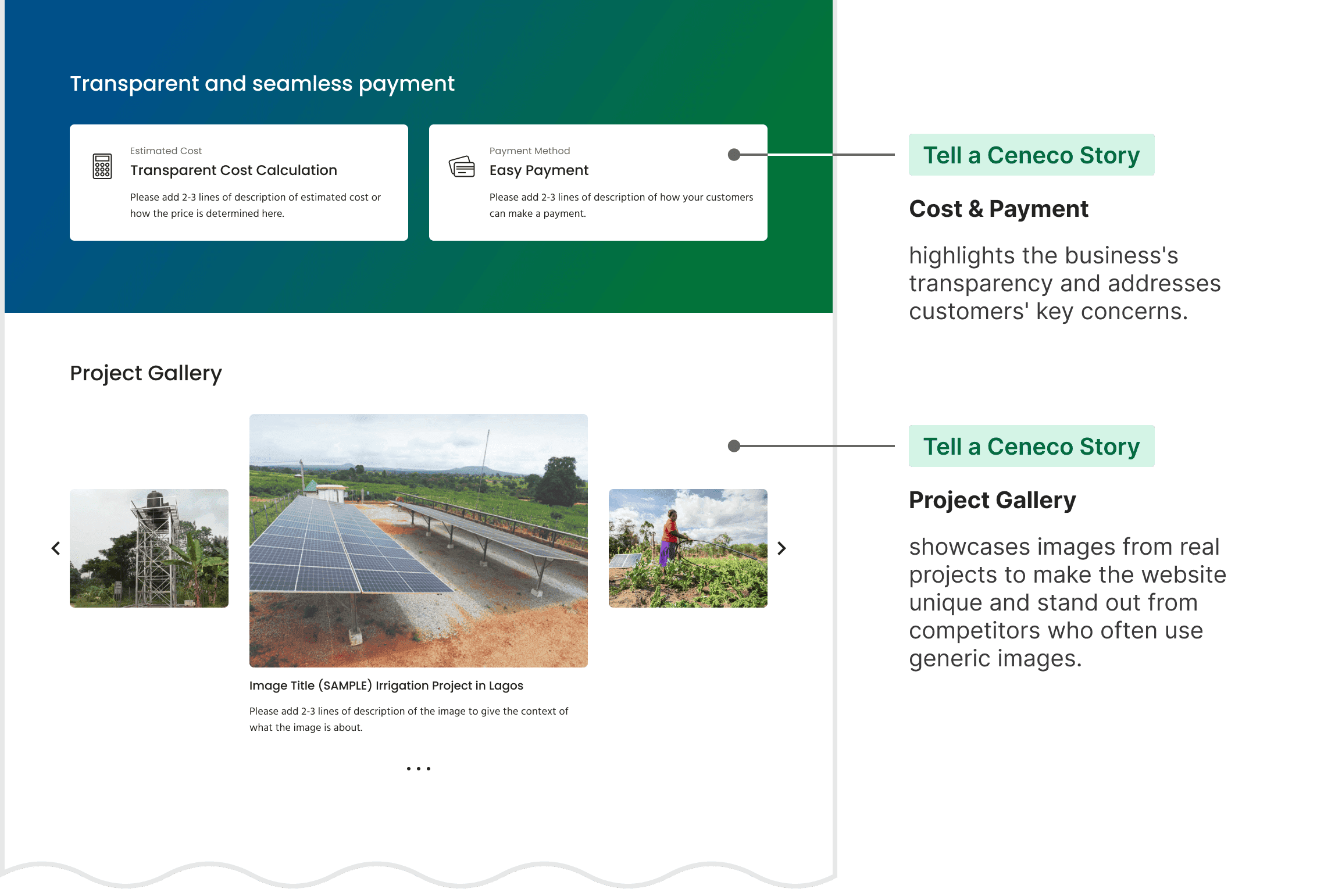
The stock images were visually appealing but we got the feedback that the design feel generic and lacked human touch and authenticity. To reflect the real identity, I added a project gallery using clients' real images.
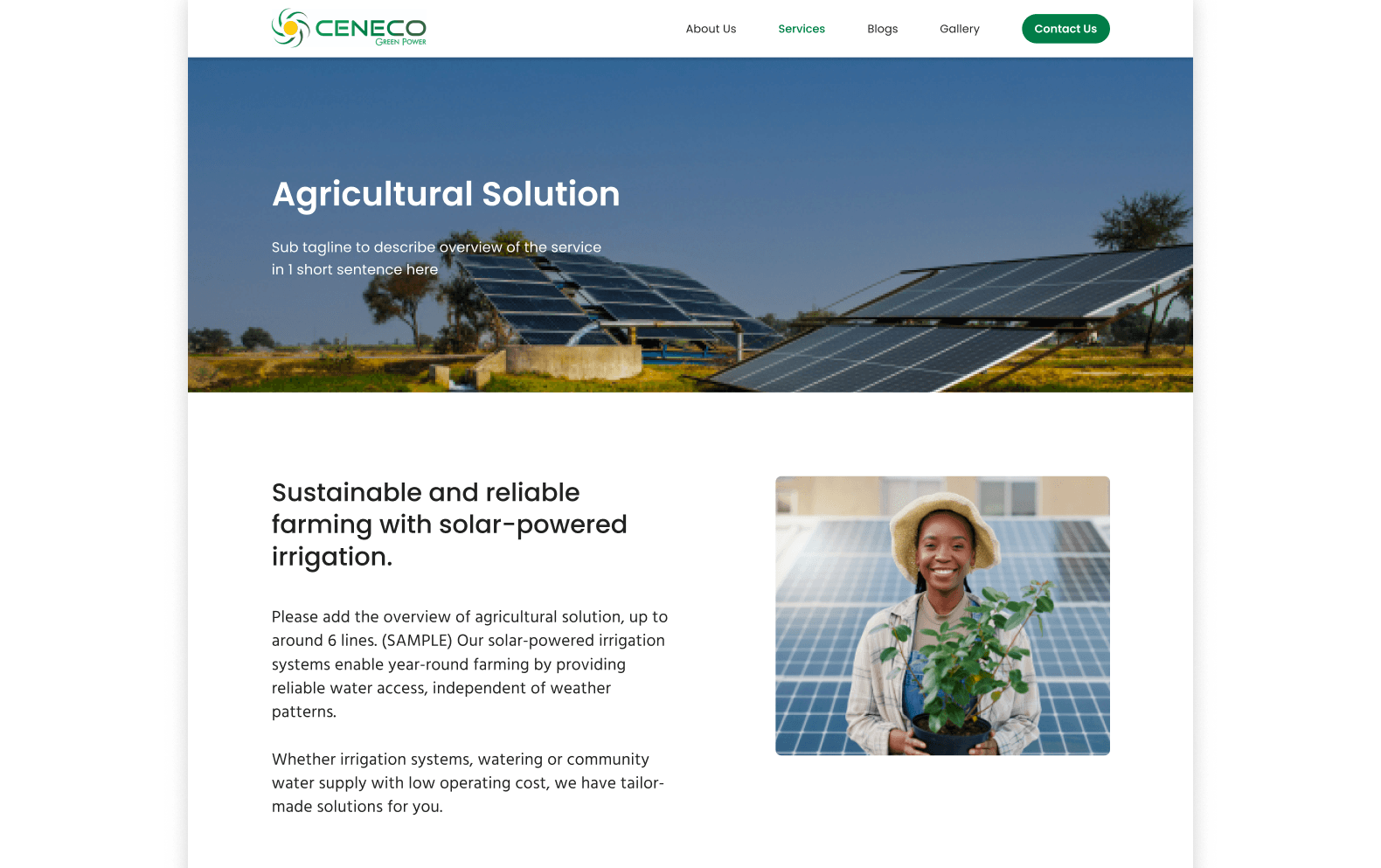
Before - ver 1
While stock images appear polished, using only them can make a site feel generic and lack authenticity.
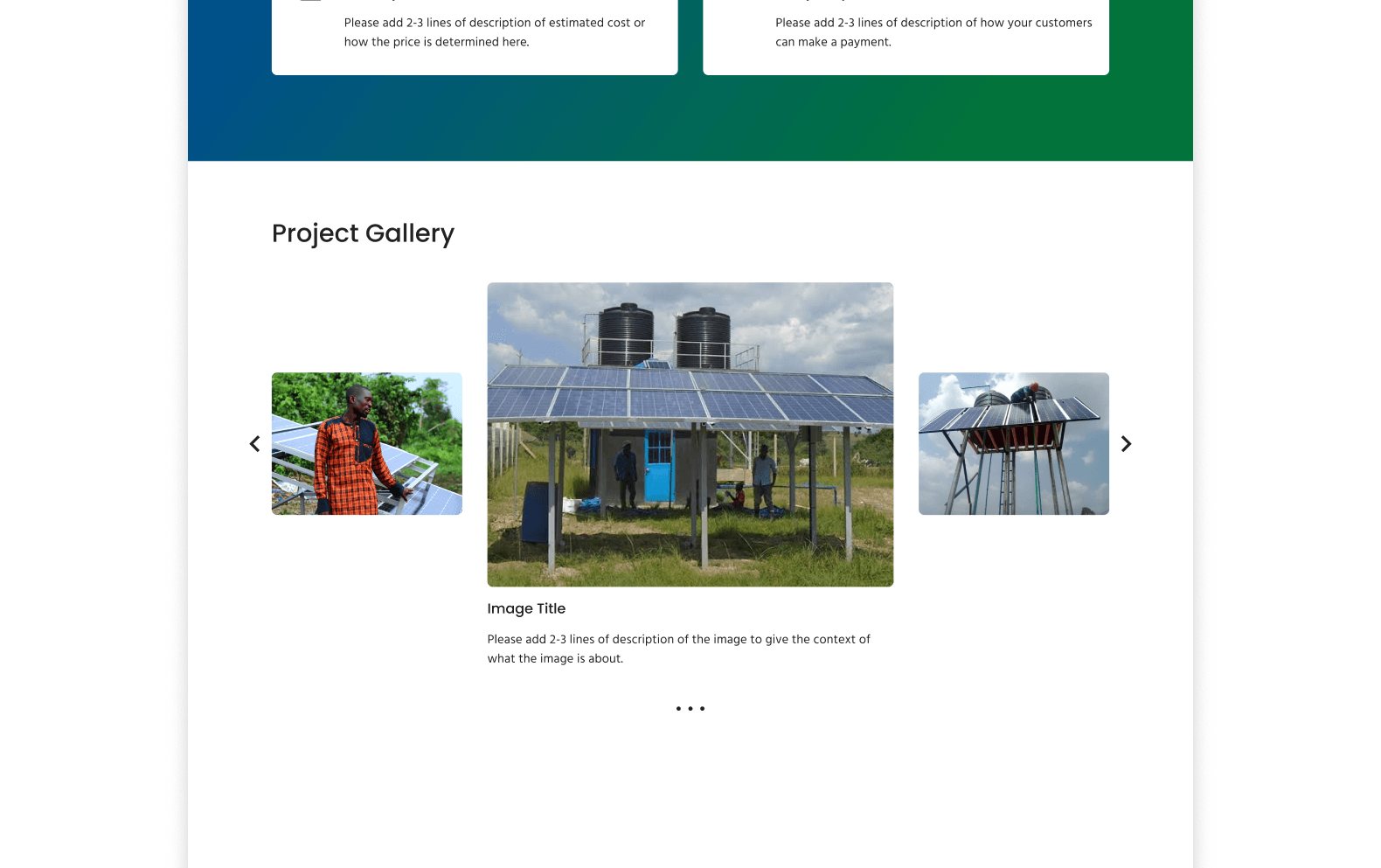
After - ver 2
Showcasing images from real projects help convey what the business is actually like.
Documentation
Supported implementation and scalability with a design guide
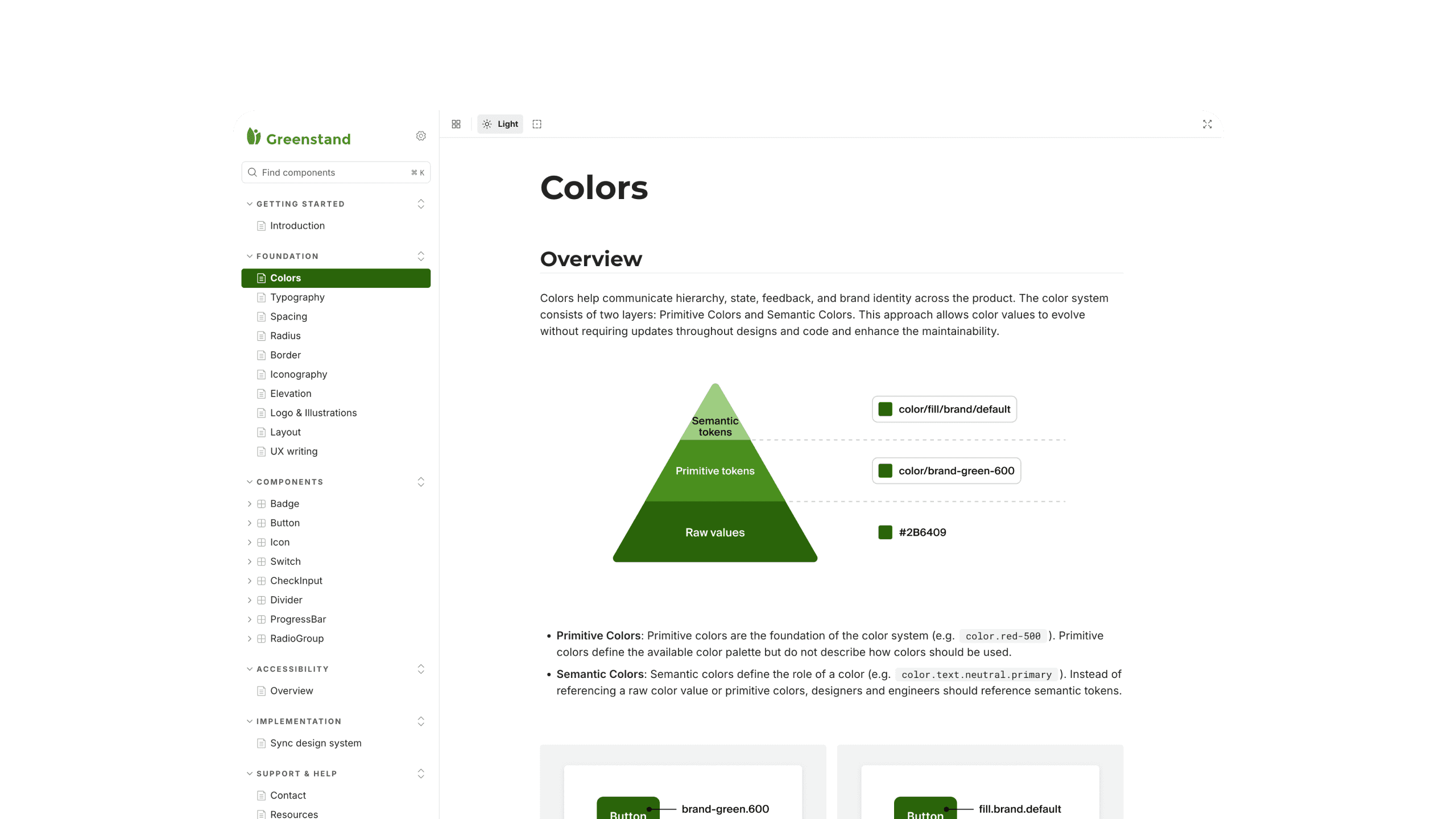
As a former software developer, I recognized the importance of communicating design to non-designers. This led me to create design guides that included visual design guidelines, content guidelines (section purposes and tips for engagement), implementation resources, and an asset list.
Documentation Objectives
Easy & smooth implementation
Knowing the client needed to implement the Figma design in WordPress, I aimed to provide resources to make the process easier.
Consistency for future pages
Anticipating the future service expansion, I aimed to share guidance on designing additional pages while maintaining consistency.
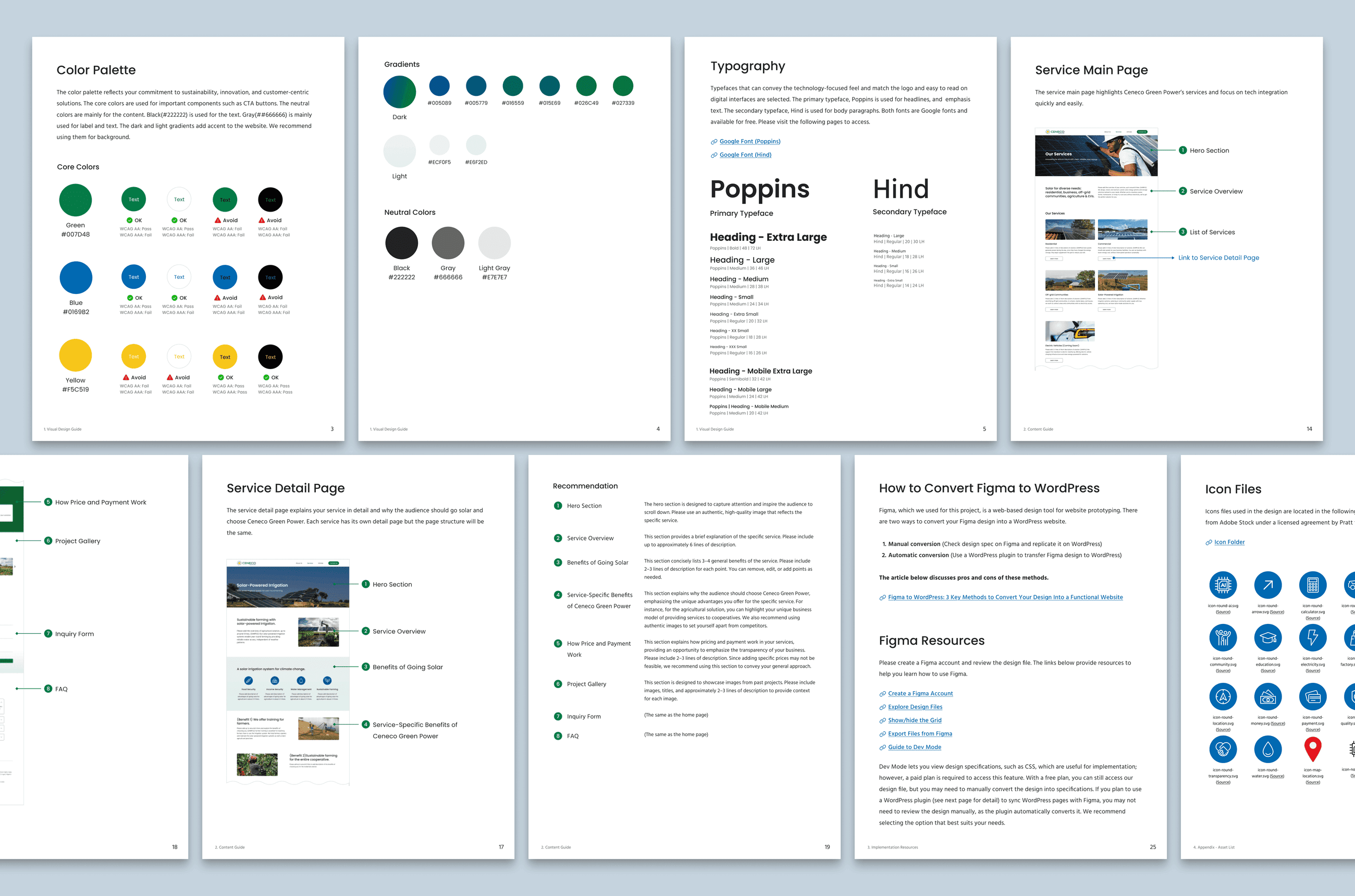
Design Guide Document
Impacts
Our collaborative approach resulted in strong client satisfaction, buy-in, and implementation
With our design and collaborative approach, the client was satisfied with our work and adopted the design. After the project, they updated their website, which has positively impacted their business, including favorable feedback from customers. We are also confirming the quantitative impact, such as analytics data, with the client.
I like how you keep it simple and sweet. What you have put out here is research driven and it's a great job.
Sunday Olusheyi Falaye, CEO
The current website is quite the opposite of old website in terms of quality and functionality.
Customer in Nigeria
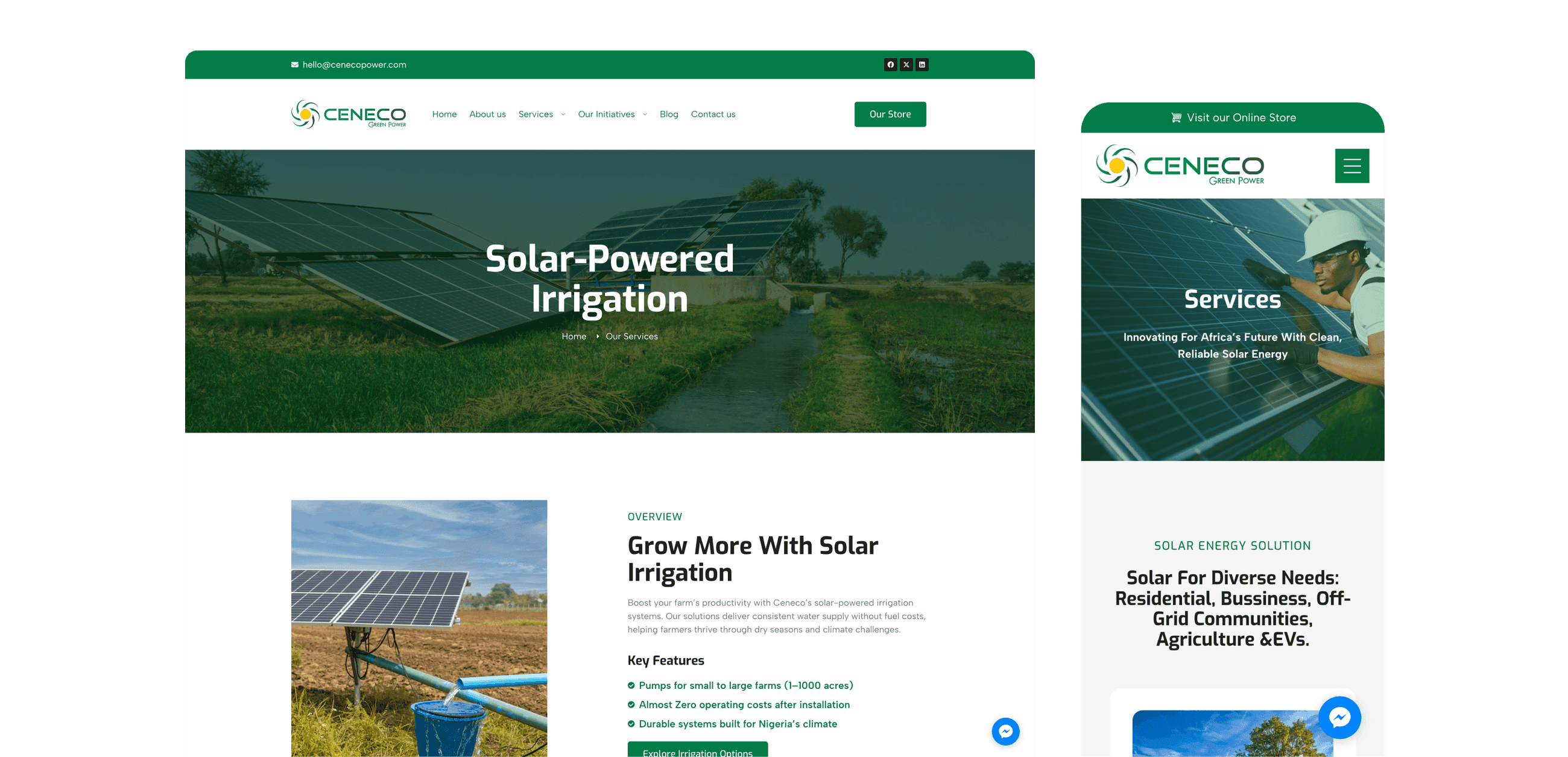
The updated client website
Takeaways
I learned the importance of adapting the design process within constraints
Regional barriers limited user access and client communication, requiring us to adapt our research and design methods. This taught me to work strategically when a full design thinking process isn't feasible. I also developed a stronger PM mindset by helping define the process, organize tasks, and keep the team aligned throughout an exploratory project.
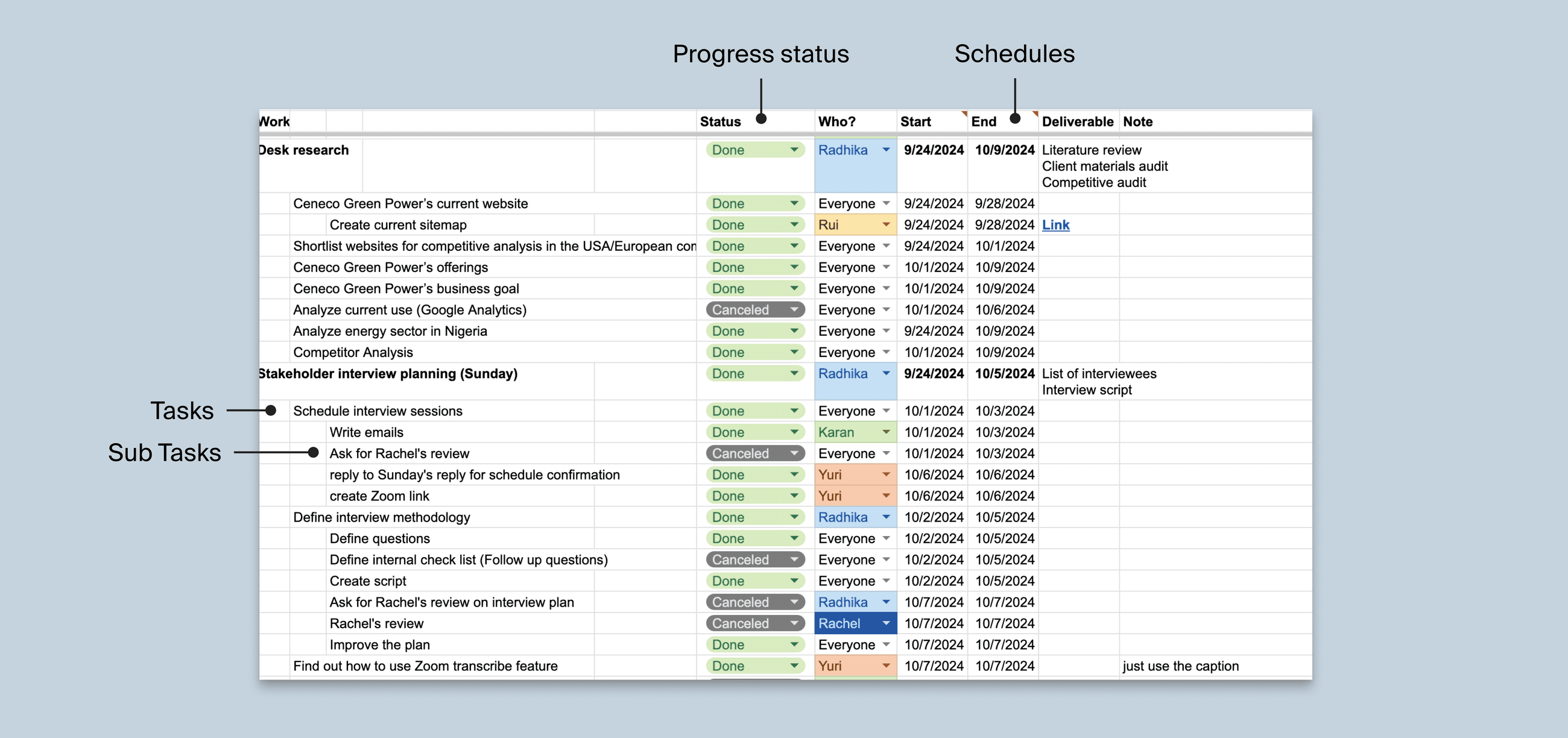
Internal project planning sheet